

What Is Shockwave Therapy?
If you are experiencing persistent pain or discomfort that has not improved with traditional treatment, shockwave therapy may be another option to consider during your physical therapy journey. Shockwave therapy, also known as extracorporeal shockwave therapy (ESWT), is a noninvasive treatment that uses acoustic waves to stimulate tissues, potentially helping reduce pain and support the body’s natural healing processes.
There are two commonly used forms of shockwave therapy: focused and radial. Focused shockwave therapy uses acoustic waves generated through electrohydraulic, electromagnetic, or piezoelectric technology. These waves concentrate energy within a targeted area and can reach different tissue depths, including deeper structures such as bone. Radial shockwave therapy uses pressure waves that spread outward from the treatment surface. Because the energy decreases with depth, radial therapy primarily targets more superficial tissues. Although both approaches are used to address musculoskeletal conditions, they differ in how acoustic energy is generated and delivered.
At DPT Physical Therapy, we use focused shockwave therapy as an additional treatment option to help patients manage pain and support their recovery. In this article, we will explore how our technology works, which conditions may benefit, what to expect during treatment, and how to get started at our Stephenville location.
How Focused Shockwave Therapy Works with the PiezoWave2T
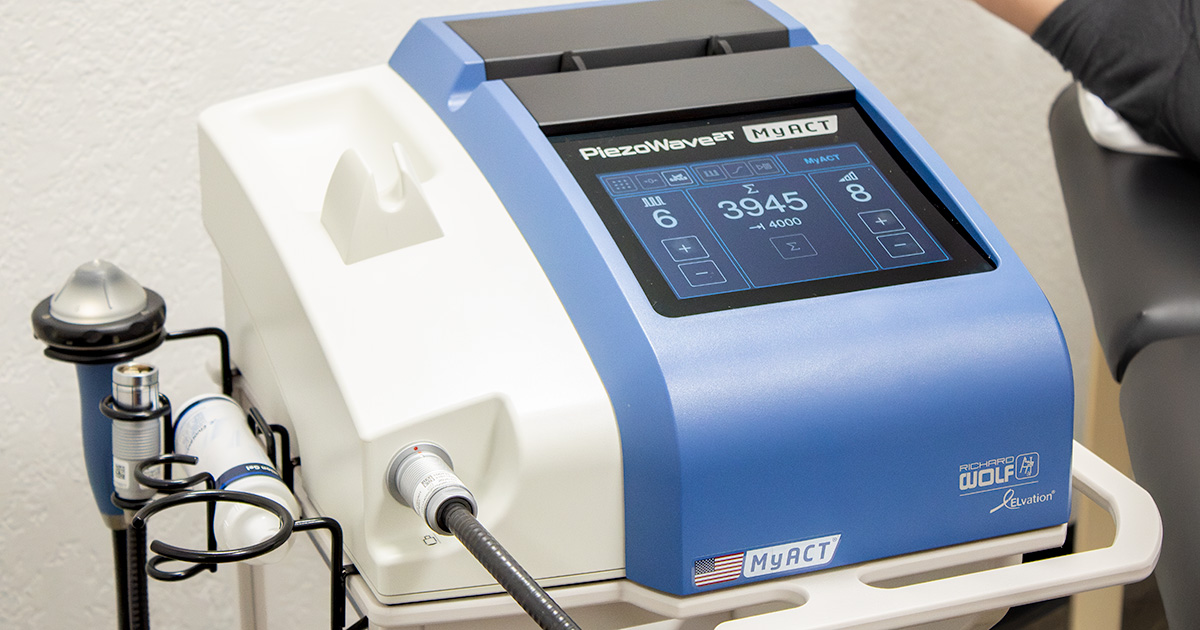
At DPT Physical Therapy, we incorporate advanced treatment technologies, including our PiezoWave2T MyACT shockwave unit. MyACT stands for Myofascial Acoustic Compression Therapy. The PiezoWave2T uses piezoelectric technology to generate focused acoustic waves. Inside the applicator, electrical energy activates hundreds of piezoelectric crystals, causing them to produce acoustic waves that travel into the body’s tissues.
The arrangement of these crystals allows the acoustic waves to converge, concentrating their energy within a targeted area. This focused approach enables therapists to deliver acoustic energy at different tissue depths depending on the area being treated. When these waves interact with tissue, they create mechanical stimulation that may encourage biological responses associated with healing. These responses may contribute to pain relief, improved mobility, and tissue recovery over time.
Unlike treatments that rely solely on surface-level stimulation, the PiezoWave2T allows therapists to target specific areas at varying depths. Treatment settings can be adjusted according to the patient’s condition, targeted tissues, and individual response.
Common Conditions Treated with Focused Shockwave Therapy
Focused shockwave therapy may be used as part of an individualized physical therapy treatment plan for several musculoskeletal conditions, including:
- Achilles tendinopathy
- Tennis elbow and golfer’s elbow
- Myofascial pain
- Calcific shoulder conditions
- Rotator cuff-related conditions
- Greater trochanteric pain syndrome
- Certain hip pain conditions
- Plantar fasciitis
Whether shockwave therapy is appropriate depends on the patient’s symptoms, medical history, and clinical evaluation.
A Closer Look at Plantar Fasciitis
One of the conditions commonly treated with shockwave therapy is plantar fasciitis. The plantar fascia is a thick band of connective tissue that runs along the bottom of the foot, extending from the heel toward the toes. When this tissue becomes irritated or develops degenerative changes, it can contribute to persistent heel pain. Have you ever gotten out of bed in the morning and experienced a sharp or aching pain in your heel with your first few steps? That can be a common sign of plantar fasciitis.
Plantar fasciitis can affect a wide range of individuals, including athletes, active adults, and people with contributing factors such as increased body weight or certain foot mechanics. Physical therapy for plantar fasciitis often includes individualized exercises, stretching, and other treatments designed to reduce pain and improve daily function. For some patients, focused shockwave therapy may be an additional option within their treatment plan.
A 2024 systematic review published in the European Journal of Physical and Rehabilitation Medicine examined 11 controlled trials investigating extracorporeal shockwave therapy for plantar fasciitis. The review found evidence that ESWT can help reduce pain, as measured using the Visual Analogue Scale (VAS). Treatment parameters, including pulse frequency and intensity, varied across the studies.
While research supports shockwave therapy as a potential treatment option for plantar fasciitis, individual results can vary. Understanding what happens during treatment can help patients feel more informed and comfortable when discussing their options with a physical therapist.
What to Expect During a Focused Shockwave Therapy Session
Shockwave therapy might sound intimidating at first, but understanding the process can help you feel more comfortable before your appointment. At DPT Physical Therapy, your journey begins with an initial physical therapy evaluation. During this appointment, your therapist will discuss your symptoms, medical history, and how your condition is affecting your everyday activities.
Your therapist may also assess factors such as strength, range of motion, and functional movement to establish a baseline and identify your treatment goals. Using this information, your therapist will develop an individualized plan of care that may include exercises, stretching, and additional treatment techniques such as focused shockwave therapy. If shockwave therapy is appropriate for your condition, your therapist will discuss incorporating it into your treatment plan.
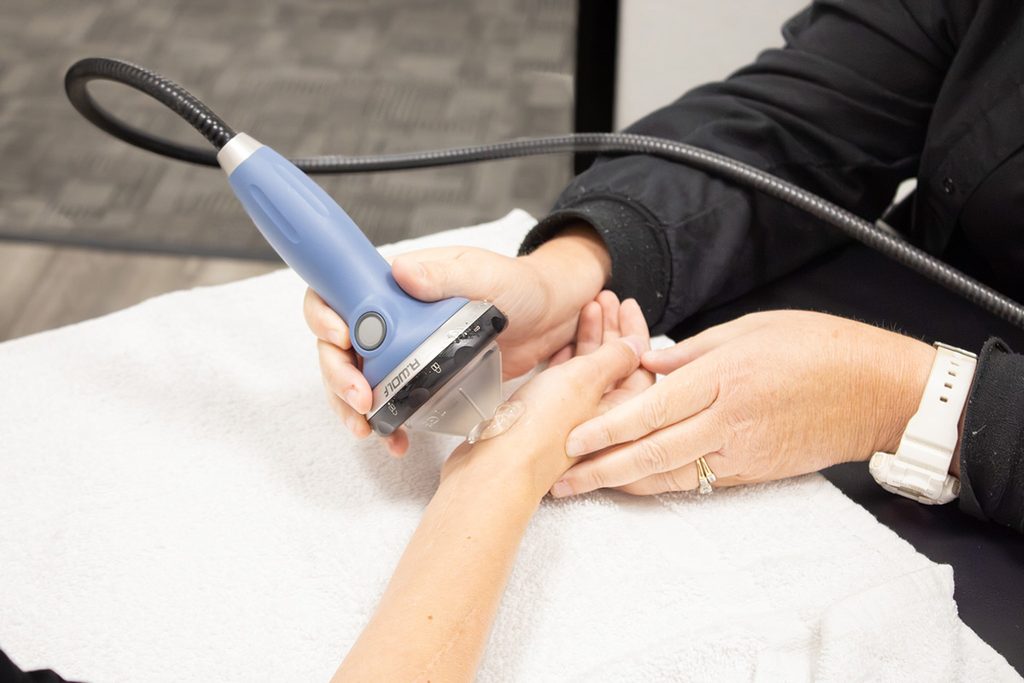
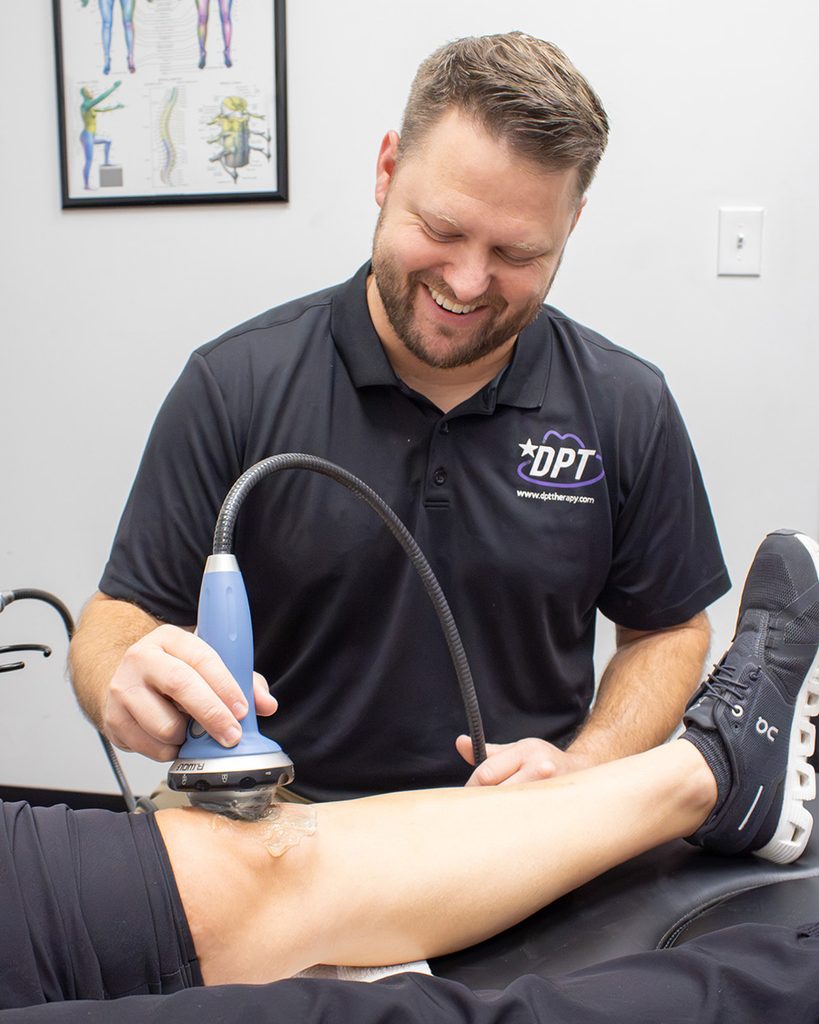
During a shockwave session, your therapist will apply a coupling gel to the targeted area and use the PiezoWave2T applicator to deliver focused acoustic waves into the tissues. As your therapist works through the treatment area, you may experience a tapping sensation or deep ache. Your therapist may identify areas of increased sensitivity and briefly remain over those areas as the sensation begins to subside. Because focused shockwave therapy can reach different tissue depths, sensations may vary depending on the area being treated and your individual response.
Throughout the session, your therapist can adjust treatment settings, including the frequency or intensity of the acoustic waves, based on your comfort and tolerance. Communication is an important part of this process, so let your therapist know what you are feeling so they can make appropriate adjustments throughout your treatment to ensure it remains tailored to your individual needs.
What to Expect After Treatment
One of the benefits of focused shockwave therapy is that it generally requires little to no downtime. Many patients can return to their usual daily activities following treatment, although your therapist may provide recommendations based on your specific condition. Some patients report feeling lighter or noticing improved comfort and movement after a session, while others may experience temporary soreness, redness, or mild bruising around the treated area.
These reactions are generally temporary, and not every patient will experience them. Because each person’s condition and response to treatment are different, it is important to communicate any discomfort, unexpected symptoms, or concerns with your physical therapist. Your therapist can help you understand what to expect as you progress through your treatment plan.
Learn More About Focused Shockwave Therapy in Stephenville
Interested in learning whether focused shockwave therapy could be an option for you? DPT Physical Therapy offers focused shockwave therapy using the PiezoWave2T at our Stephenville location. Shockwave therapy sessions are not covered by insurance and are offered at an out-of-pocket cost of $75 per session following your initial evaluation. The overall number of appointments will depend on your condition and individualized treatment plan.
For patients with chronic conditions, treatment may involve approximately 6–10 sessions, potentially up to three times per week. For patients with acute conditions, treatment may involve approximately 4–6 sessions, typically around twice per week. These are general estimates rather than guaranteed treatment schedules. Your physical therapist will determine the appropriate frequency and duration of treatment based on your evaluation, symptoms, and response to care.
Ready to Make Waves?
Whether you are managing persistent discomfort or exploring additional treatment options, our team at DPT Physical Therapy is here to help you take the next step toward your recovery goals. Call DPT Physical Therapy in Stephenville or complete the contact form on our website to schedule an initial evaluation and learn whether focused shockwave therapy may be right for you.
Let us get you back to life!